Various innovative cashless vending systems have emerged with technological development and the rise of cashless methods in retail. We have summarized a couple of them in this post – take a look.
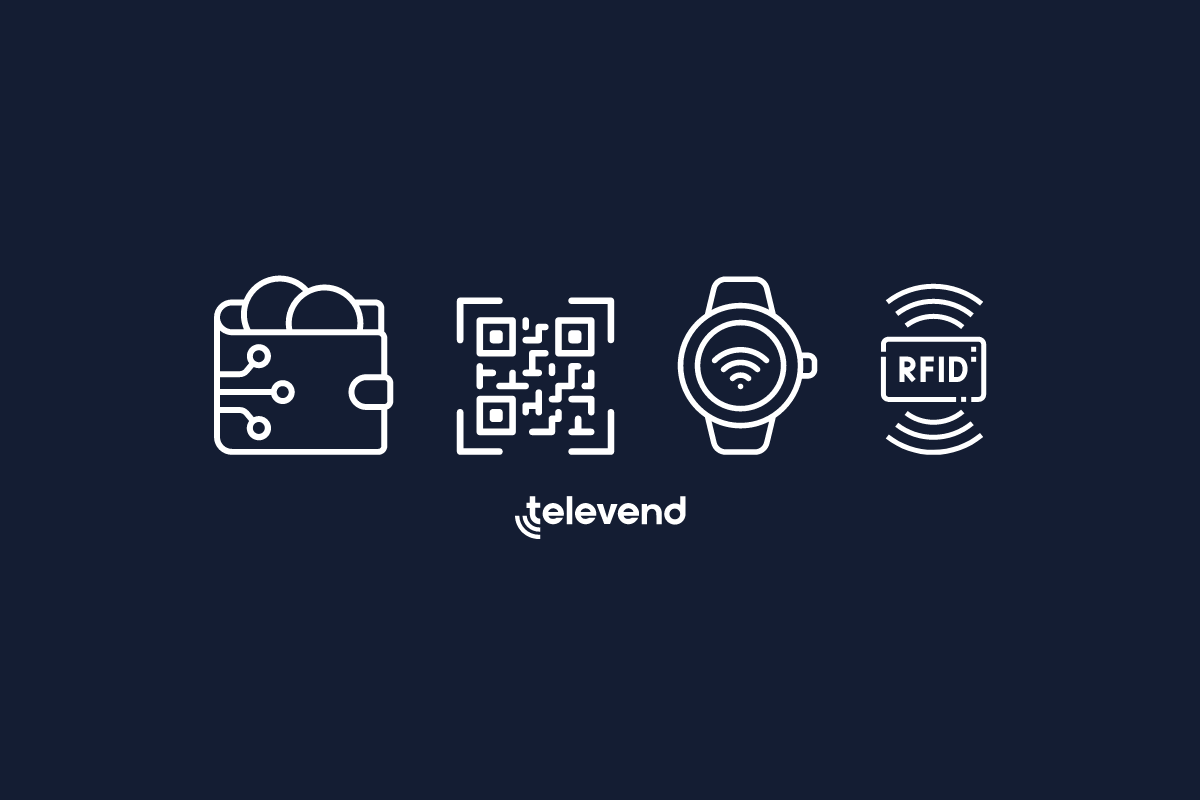
Digital Wallets
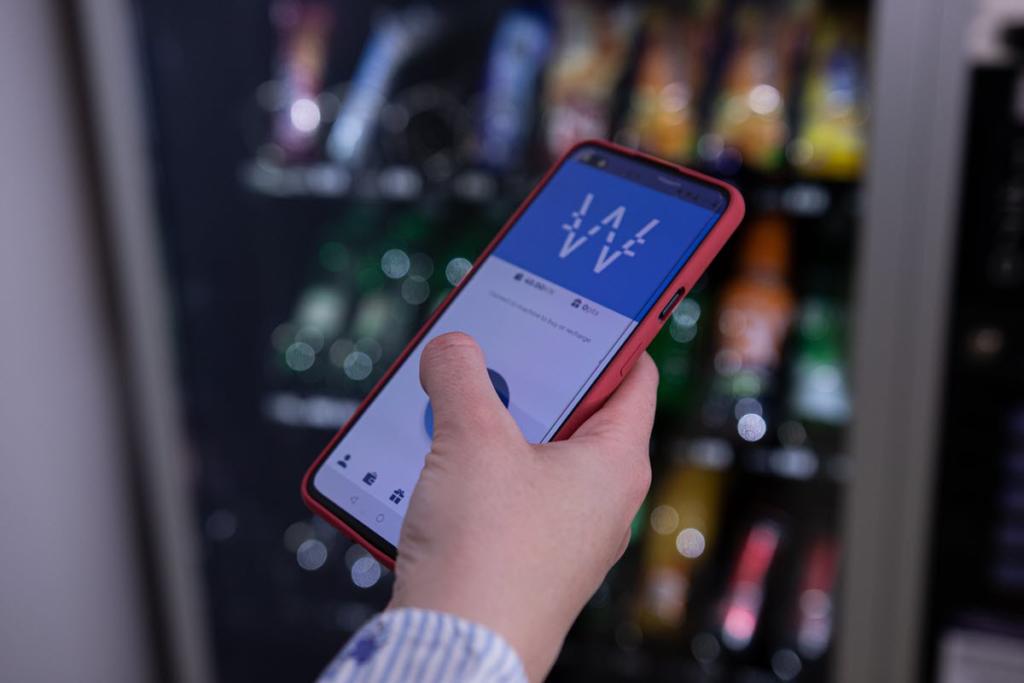
Digital wallets are a type of online payment tool, usually in an app. The advantages of digital wallets for consumers are numerous. Convenience is the most obvious one. They don’t need to carry their wallets or remember multiple bank card PINs. All their debit and credit card information is connected to a single app. They can also save digital tickets and e-vouchers in the app to always have them at hand.
Moreover, consumer payment information is saved in a protected central location. The card number is never stored in the app itself but is instead assigned a unique virtual number, protecting consumer money even if their smartphone is lost or stolen. Since digital wallets sit within their passcode-protected phone, where payments are often possible only via fingerprint, they’re quite secure.
Different apps allow different types of access. Open wallets enable online purchases and contactless in-store payments with most retailers and may even enable withdrawals at selected ATMs. The most popular open wallets are Apple Pay, Google Pay, Samsung Pay, Pay Pal, and Venmo. The benefit of open wallets is that they can be used anywhere and for any transaction.
Semi-closed and closed wallets allow certain transactions with a specific group of vendors or only with the vendor that issued the wallet. Consumers can benefit from using such wallets since they usually have some sort of vending loyalty program integrated. The more they use the wallet app, the more loyalty points they earn. There are also benefits for vendors, as they can learn quite a bit about consumer habits from the wallet usage data.
QR Code Vouchers
A QR technology, short for Quick Response technology, is a digital code used to store or link information. The QR code has become one of the most popular payment methods used worldwide. Why is that so? The advantages of QR codes are versatile.
First, the code is easily scannable via a mobile app, such as a digital wallet or phone’s integrated scanner. Customers just need to scan the code without bothering to bring a credit card, have the exact amount of cash, or the correct paper bill. Secondly, they are contactless. Consumers don’t need to touch any surface besides their phones.
QR codes can be a very effective promotional channel for vending operators. For instance, operators can promote new products by distributing digital or paper QR code vouchers to consumers who earned them by interacting with a new product in a specified way, such as social media engagement. A consumer can then scan the QR voucher at the machine and redeem it for a discount or free vend. Companies can use the same method to distribute free vend vouchers to their employees, rewarding their good work and boosting a positive office vibe.
Promotions with QR codes can be even more specific. For instance, vendors can require consumers to buy a product in a classic retail store or machine and then generate a QR code at the receipt. Consumers can then scan their receipts with the next purchase at the vending machine to access promotional discounts.
Note that these two types of QR code promo activities require a barcode scanner and a receipt printer integrated into a machine, adding extra costs to your machine setup.
Wearables
In recent years, the Near Field Communication (NFC) function has developed further than its typical use within bank cards and mobile apps. Rapid technology development has transformed stylish accessorize into convenient and functional gadgets. Nowadays, using rings, wristbands, bracelets, and smartwatches as paying methods is becoming more common.
A smartwatch is a wearable computer in the form of a watch, whose functionalities can range from measuring fitness activity, GPS route tracking, and gaming to fully-fledged phone activity such as calls, SMS messages, and emails. Smartwatches, as we know them today, had first become popular when Sony launched their SmartWatch back in 2012. However, the smartwatch market heated up with Apple and Samsung coming to play the following year. Besides smartphones, they remain the most popular gadget among tech consumers, making up 15 percent of the wearable technologies market.
Unlike smartwatches that are often bulky, wristbands, bracelets, and rings are much more toned-down and nonassertive. The term wristband refers to a ribbon-like, silicone object that wraps around the wearer’s wrist like a bracelet. In contrast to wristbands that look simple, bracelets and rings have more varied designs and are more suitable for fashion lovers. They can be made of a combination of metal, rubber, silicone, and wood.
Since many vendors already have installed NFC readers to support other cashless options, accepting wearable payments doesn’t generate additional investment costs. On the other hand, the benefit for consumers is immediate adoption and convenience – they use the familiar technology to perform one additional task.
RFID Payment
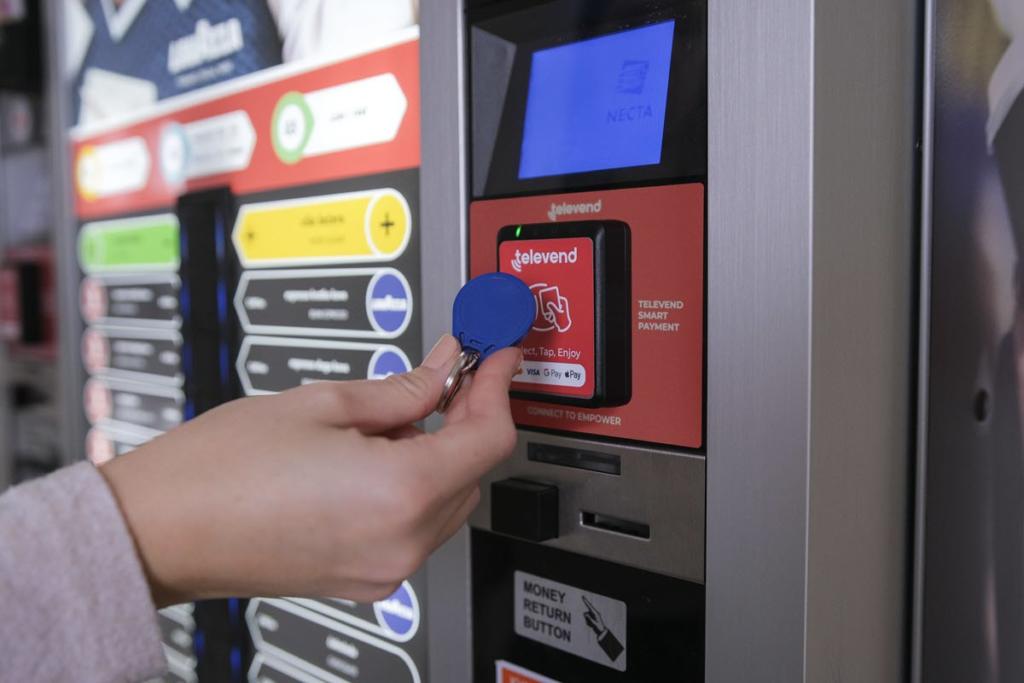
RFID stands for Radio Frequency Technology, which includes two counterparts – a reader and a tag. A reader uses radio waves to identify an RFID-tagged object, such as a card or other wearable, within a closed-loop environment. This system is commonly used in offices and schools. RFID cards are usually distributed to students and employees for two purposes – to grant them a specific spending budget at vending machines and allow them access to a school or office building.
Each RFID card or object is assigned to a specific person and has its ID number in the telemetry system. The amount available for use is shown in the system and on the machine at the time of purchase. RFID cards have many benefits for employees, which create a positive work atmosphere and boost morale. Companies can:
- Boost employee productivity by giving employees a budget to buy a snack, coffee, or even a full meal at the machine, so they don’t need to waste time buying them outside of the office.
- Reward top people for good work and contribution at the workplace or school by giving them RFID gift cards.
You can find various RFID readers on the market. Some readers can support both RFID and NFC functionality, which is the best option for vendors who want to serve both internal and external audiences. However, if you intend to serve only a closed environment, the RFID reader is ideal since the device is up to 10 times more affordable than card readers.
Cashless Vending Systems Comparison
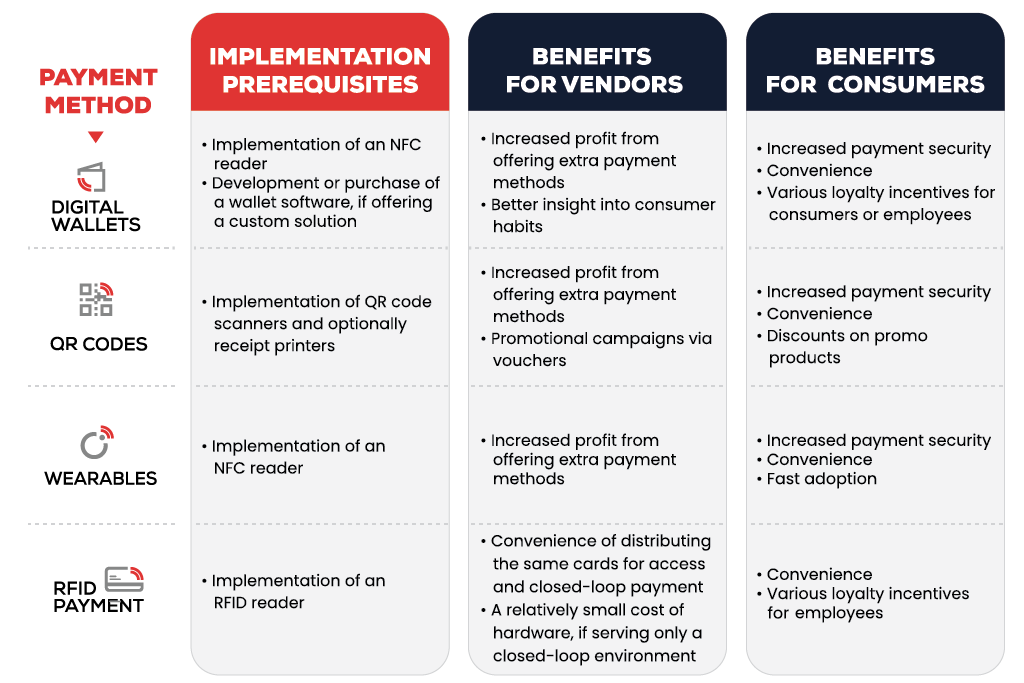
We have summarized the main benefits and prerequisites for each of the mentioned cashless vending systems in the table below:
Now that you are aware of all cashless methods you can implement at your machines, you can schedule a demo with our product consultants to learn more about Televend’s cashless payment solutions.
Various innovative cashless vending systems have emerged with technological development and the rise of cashless methods in retail. We have summarized a couple of them in this post – take a look.
Digital Wallets
Digital wallets are a type of online payment tool, usually in an app. The advantages of digital wallets for consumers are numerous. Convenience is the most obvious one. They don’t need to carry their wallets or remember multiple bank card PINs. All their debit and credit card information is connected to a single app. They can also save digital tickets and e-vouchers in the app to always have them at hand.
Moreover, consumer payment information is saved in a protected central location. The card number is never stored in the app itself but is instead assigned a unique virtual number, protecting consumer money even if their smartphone is lost or stolen. Since digital wallets sit within their passcode-protected phone, where payments are often possible only via fingerprint, they’re quite secure.
Different apps allow different types of access. Open wallets enable online purchases and contactless in-store payments with most retailers and may even enable withdrawals at selected ATMs. The most popular open wallets are Apple Pay, Google Pay, Samsung Pay, Pay Pal, and Venmo. The benefit of open wallets is that they can be used anywhere and for any transaction.
Semi-closed and closed wallets allow certain transactions with a specific group of vendors or only with the vendor that issued the wallet. Consumers can benefit from using such wallets since they usually have some sort of vending loyalty program integrated. The more they use the wallet app, the more loyalty points they earn. There are also benefits for vendors, as they can learn quite a bit about consumer habits from the wallet usage data.
QR Code Vouchers
A QR technology, short for Quick Response technology, is a digital code used to store or link information. The QR code has become one of the most popular payment methods used worldwide. Why is that so? The advantages of QR codes are versatile.
First, the code is easily scannable via a mobile app, such as a digital wallet or phone’s integrated scanner. Customers just need to scan the code without bothering to bring a credit card, have the exact amount of cash, or the correct paper bill. Secondly, they are contactless. Consumers don’t need to touch any surface besides their phones.
QR codes can be a very effective promotional channel for vending operators. For instance, operators can promote new products by distributing digital or paper QR code vouchers to consumers who earned them by interacting with a new product in a specified way, such as social media engagement. A consumer can then scan the QR voucher at the machine and redeem it for a discount or free vend. Companies can use the same method to distribute free vend vouchers to their employees, rewarding their good work and boosting a positive office vibe.
Promotions with QR codes can be even more specific. For instance, vendors can require consumers to buy a product in a classic retail store or machine and then generate a QR code at the receipt. Consumers can then scan their receipts with the next purchase at the vending machine to access promotional discounts.
Note that these two types of QR code promo activities require a barcode scanner and a receipt printer integrated into a machine, adding extra costs to your machine setup.
Wearables
In recent years, the Near Field Communication (NFC) function has developed further than its typical use within bank cards and mobile apps. Rapid technology development has transformed stylish accessorize into convenient and functional gadgets. Nowadays, using rings, wristbands, bracelets, and smartwatches as paying methods is becoming more common.
A smartwatch is a wearable computer in the form of a watch, whose functionalities can range from measuring fitness activity, GPS route tracking, and gaming to fully-fledged phone activity such as calls, SMS messages, and emails. Smartwatches, as we know them today, had first become popular when Sony launched their SmartWatch back in 2012. However, the smartwatch market heated up with Apple and Samsung coming to play the following year. Besides smartphones, they remain the most popular gadget among tech consumers, making up 15 percent of the wearable technologies market.
Unlike smartwatches that are often bulky, wristbands, bracelets, and rings are much more toned-down and nonassertive. The term wristband refers to a ribbon-like, silicone object that wraps around the wearer’s wrist like a bracelet. In contrast to wristbands that look simple, bracelets and rings have more varied designs and are more suitable for fashion lovers. They can be made of a combination of metal, rubber, silicone, and wood.
Since many vendors already have installed NFC readers to support other cashless options, accepting wearable payments doesn’t generate additional investment costs. On the other hand, the benefit for consumers is immediate adoption and convenience – they use the familiar technology to perform one additional task.
RFID Payment
RFID stands for Radio Frequency Technology, which includes two counterparts – a reader and a tag. A reader uses radio waves to identify an RFID-tagged object, such as a card or other wearable, within a closed-loop environment. This system is commonly used in offices and schools. RFID cards are usually distributed to students and employees for two purposes – to grant them a specific spending budget at vending machines and allow them access to a school or office building.
Each RFID card or object is assigned to a specific person and has its ID number in the telemetry system. The amount available for use is shown in the system and on the machine at the time of purchase. RFID cards have many benefits for employees, which create a positive work atmosphere and boost morale. Companies can:
- Boost employee productivity by giving employees a budget to buy a snack, coffee, or even a full meal at the machine, so they don’t need to waste time buying them outside of the office.
- Reward top people for good work and contribution at the workplace or school by giving them RFID gift cards.
You can find various RFID readers on the market. Some readers can support both RFID and NFC functionality, which is the best option for vendors who want to serve both internal and external audiences. However, if you intend to serve only a closed environment, the RFID reader is ideal since the device is up to 10 times more affordable than card readers.
Cashless Vending Systems Comparison
We have summarized the main benefits and prerequisites for each of the mentioned cashless vending systems in the table below:
Now that you are aware of all cashless methods you can implement at your machines, you can schedule a demo with our product consultants to learn more about Televend’s cashless payment solutions.
Table of Contents

Subscribe To Our Newsletter
Sign up to our monthly business newsletter for useful articles, tips, and tricks for boosting your business success.
By subscribing, you consent to receive email marketing communications from Televend. For more
information please read our Privacy Policy.